Newborn sewing patterns and baby clothes patterns are labelled by age, but a baby is not an age, so the label tells you almost nothing about the garment you will end up holding. Measure the baby’s chest, add 2 to 3 inches of ease, and compare that number with the finished chest on the pattern before you cut. The twelve projects below give you that number for each one, in inches.
Quick answer: A 0-3 month baby is roughly 17 in around the chest and 24 in tall, 3-6 months is 18 in and 26 in, 6-12 months is 19 in and 29 in. Sew a top or onesie with a finished chest 2 to 3 in bigger than the baby, a lined jacket 5 in bigger. Start with the four projects that have no fit at all, or a ready-made baby pants pattern.
Why Sizing Is the Whole Problem Here
When you start sewing for a baby, you want to make clothes first, not a quilt or a bag. Clothes are also where you go wrong most often.
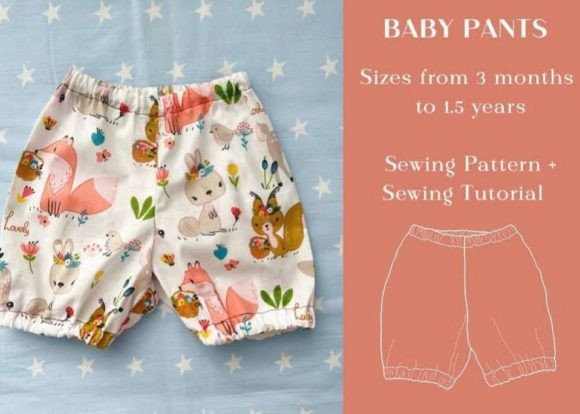
If you would rather skip the drafting, you can start from a baby pants sewing pattern that prints the finished sizes.
With adult clothes you can try the piece on halfway through. With a baby you cannot, and she grows while you sew. The envelope says “3-6 months” and says nothing about what the garment measures when it is finished.
I learned this the hard way: my first romper was labelled 3-6 months and fit a doll. I now measure every pattern before I buy fabric, and you should too.

The age on the label is a guess. The number that decides fit is the finished chest measurement, and you need it to be 2 to 3 inches bigger than the baby.
You get most of the difference between a pattern that fits and one that just looks cute from that one swap. It is also why you see so many people give up and buy ready-made.
Newborn Sewing Patterns: Baby Measurements, Roughly


| Age | Chest | Height | Back neck to waist |
|---|---|---|---|
| Newborn | 16 in | 21 in | 6 in |
| 0-3 months | 17 in | 24 in | 6.5 in |
| 3-6 months | 18 in | 26 in | 7 in |
| 6-12 months | 19 in | 29 in | 7.5 in |
| 12-18 months | 20 in | 31 in | 8 in |
You will find babies vary more than this table suggests, so you should measure the actual baby when you can. If you cannot, lay a onesie that fits her now flat and measure across the chest, then double it.
I keep one well-fitting onesie in my drawer just for this, and you can do the same with any garment she wears now.
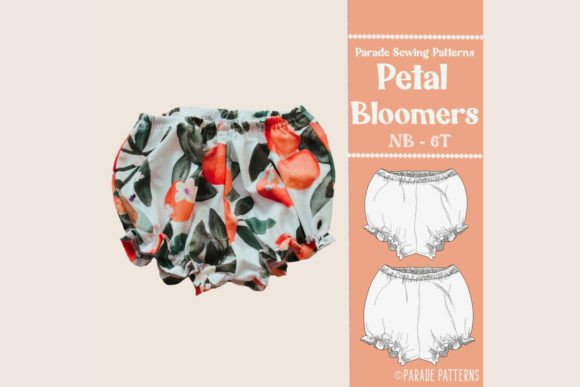
You can check any pattern against this table, including a petal bloomers pattern, before you buy fabric.
That is also how you make children’s clothes patterns without drafting anything: you trace a garment that fits, then add your ease.


Four Projects Where Size Barely Matters
These are the easy baby sewing projects you can do in your first week at the machine. You cut rectangles, and a rectangle cannot be the wrong size for a baby.
I sew these first with every new beginner I help, because you see a finished result in an hour and you cannot get the size wrong.
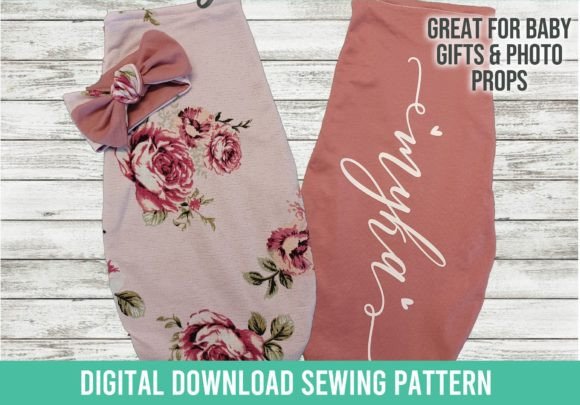
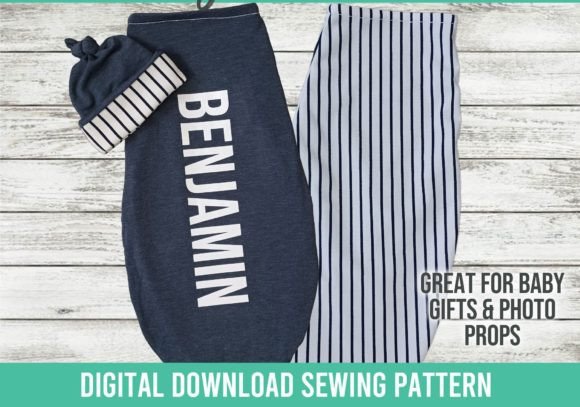
You will cut these in an evening, and a swaddle cocoon and hat set is the next step once you want a gift.
1. Receiving blanket
- Finished size: 36 x 36 in. Cut two 37 in squares, sew right sides together, leave a gap, turn and topstitch.
- Fabric: double gauze or flannel, about 2 1/4 yd at 44 in wide.
- Watch for: a crisp corner. Clip the corners before you turn.
2. Burp cloths
- Finished size: 10 x 18 in. Cut two rectangles 11 x 19 in, or use a prefold nappy.
- Fabric: cotton on top, terry or flannel underneath, from scraps.
- Watch for: making only one. You will want six.

3. Bib
- Finished size: 8 in wide, 9 in long, 5 in neck opening. A 5 in neck opening sounds tiny, and it is right.
- Fabric: cotton front, towelling back, a snap at the neck.
- Watch for: a hook-and-loop strip that scratches. Snaps are kinder.
4. Crib sheet
- Finished size: fits a 28 x 52 in mattress. Cut 45 x 69 in, cut an 8 in square from each corner, sew the corners.
- Fabric: cotton sheeting, 2 yd at 60 in wide, with 1/4 in elastic in a casing.
- Watch for: the corner squares. 8 in is what grips a 6 in deep mattress.


Four Where Size Matters a Little
Here you dress a body, but the design forgives a missed inch.
I still check the chest number here, and you should check it too before you cut.
You can take your time here, and a knotted gown pattern is a good example of a design that forgives an inch.
5. Kimono top
- Finished size: finished chest 20 in for a 17 in baby. The wrap front absorbs an inch either way.
- Fabric: cotton jersey or flannel, 1/2 yd.
- Watch for: long ties. Keep them under 6 in or use snaps.
6. Harem trousers
- Finished size: waist 18 in flat, inseam 7 in for 0-3 months. Add 2 in to the inseam for each size up.
- Fabric: cotton jersey, 1/2 yd.
- Watch for: a too-tight ankle elastic. Test it on your own wrist first.
7. Pinafore dress
- Finished size: chest 21 in, length 15 in for 3-6 months. It stays loose, so it lasts two sizes and then becomes a top.
- Fabric: quilting cotton or light denim, 3/4 yd.
- Watch for: shoulder buttons. Sew them on with a shank and double thread.
8. Sleep sack
- Finished size: 15 in wide at the chest, 26 in long for 0-6 months.
- Fabric: cotton jersey or light linen, 1 yd.
- Watch for: the neck and armholes. They should be snug enough that she cannot slip down inside. No hood.


Four Where You Have to Get It Right
This is where you follow the stretch-fabric rules, and where the sizing table above earns its place.
I test every knit on a scrap first, and you will save yourself a ruined bodysuit if you do that as well.
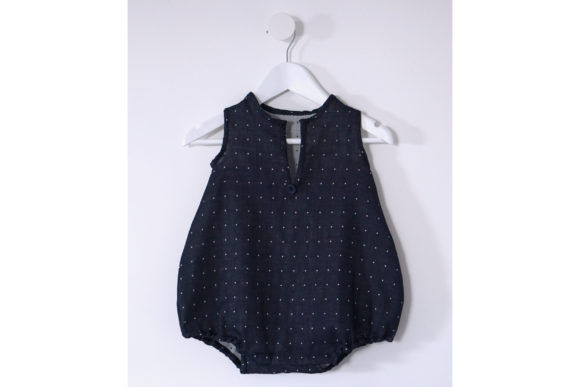
You need a tested pattern for these, such as this romper tutorial with a size chart.
9. Bodysuit (onesie)
- Finished size: finished chest 19 in for a 17 in baby, in knit.
- Fabric: cotton jersey with at least 30 percent stretch, 1/2 yd.
- Watch for: the lap shoulder. A 1.5 in overlap is what lets the neck stretch over a head.

10. Romper
- Finished size: finished chest 20 in, body length 14 in for 0-3 months.
- Fabric: cotton jersey, 3/4 yd.
- Watch for: body length, not chest. Too short and it pulls every time she stretches, so add an inch.
11. Leggings
- Finished size: 7 in inseam, 18 in flat waist for 0-3 months.
- Fabric: jersey with good recovery, 1/2 yd.
- Watch for: the back rise over a nappy. Add 1 in there, not at the waist.
12. Lined jacket
- Finished size: finished chest 22 in for a 17 in baby, sleeve 8 in shoulder to wrist.
- Fabric: cotton outer 1 yd, lining 1 yd.
- Watch for: ease. It goes over other clothes, so allow 5 in rather than 2.
Three Things That Ruin a Baby Garment
- Rough seams against the skin. Use French seams or an overlocked seam pressed flat. Nothing raw, nothing bulky at the shoulder.
- A neck opening with no give. A woven neck has to clear the head with no stretch, so it gapes when worn. Bind it in knit or add a placket.
- Anything that can come off. Buttons, long ties, loose appliqué. Use snaps and topstitched appliqué instead.

Snaps beat buttons for baby clothes because they sit flat and cannot be picked off a thread. You only need a hand snap tool and a kit, and you should tug-test every snap after you set it.
You can avoid all three if you pick a cocoon swaddle and headband pattern that uses snaps and flat seams.


Fabric, and How Much

Only about one in eight sewing posts names a fabric at all, and cotton makes up over a third of those that do. For babies the list is shorter still: cotton jersey, double gauze, flannel, quilting cotton and a little linen.
| Project | Fabric | Yardage (44 in wide) | Edge finish |
|---|---|---|---|
| Receiving blanket | Double gauze, flannel | 2 1/4 yd | Topstitch |
| Burp cloths, bib | Cotton and terry | Scraps | Serged or turned |
| Crib sheet | Cotton sheeting | 2 yd (60 in wide) | Elastic casing |
| Kimono top, trousers, leggings | Cotton jersey | 1/2 yd each | Zigzag or bind |
| Bodysuit | Jersey, 30% stretch | 1/2 yd | Neck binding |
| Romper, pinafore | Jersey, quilting cotton | 3/4 yd each | Bias binding |
| Sleep sack | Jersey, light linen | 1 yd | French seam |
| Lined jacket | Cotton plus lining | 1 yd plus 1 yd | Turned and topstitched |
Wash the fabric first, hot, twice. You wash baby clothes far more than anything else you sew, and a shrunk romper is why you often end up with one that is too small.
I wash my fabric twice before I cut, and you will notice the difference after the first wash.
Knit or woven for a first project?
- Knit: forgiving on fit, needs a ballpoint needle and a narrow zigzag.
- Woven: easier to cut and sew, less forgiving on the neck.
- My pick: a beginner-friendly cotton jersey T-shirt hack is the fastest first onesie.
If you would rather start from a finished pattern than from measurements, these three have a clear sizing and photo guide.
Unlimited creative assets. Access to AI tools.
Commercial licence included.


Popular Baby Patterns to Sew Next

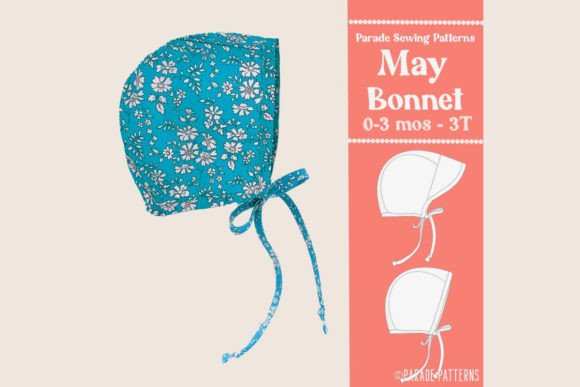
Once the twelve projects feel easy, you will want the patterns below, which sewists save most. They are the newborn extras, the photo-prop sets and the dressier pieces.
Swaddles and cocoons


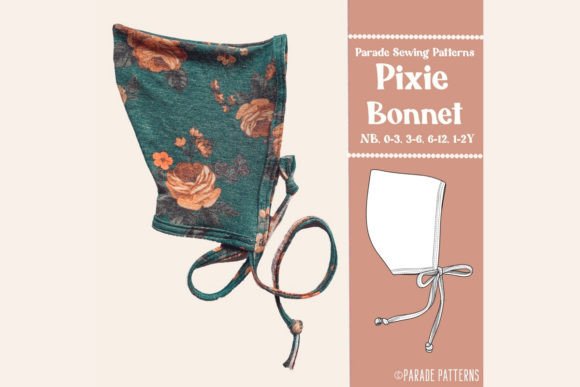
Bonnets and dressy tops


Which of the twelve make a good baby-shower gift?
- The receiving blanket and burp cloths: the gift she will use up first.
- A kimono top in 6-12 months: still fits when the shower is over.
- A bib set with snaps: quick, cheap, and every new mother needs them.
You should sew gifts one size up. A 0-3 month garment is worn for a few weeks, while a 6-12 month one is worn for a season.


Baby Sewing FAQ
What are the best baby clothes sewing patterns for a first project?
The best baby clothes sewing patterns for a first project are the ones where you can read the finished chest measurement. You can start with a kimono top, a bib or a bodysuit.
Is it hard to sew baby clothes?
It is not hard, but you will find it unforgiving on size. You start with rectangles, then you add one fitted piece at a time, for example an angel sleeve swing top.
How do I sew baby clothes for beginners?
You pick a stretch cotton jersey, a ballpoint needle and a simple pattern with no buttons. Sew the kimono top first, then move to the bodysuit. Our beginner sewing list shows the order I teach.
How do I sew newborn baby clothes?
You should sew 3-6 months rather than newborn. Newborn size fits for a few weeks, and you may find your baby skips it. A garment with an 18 in finished chest lasts you much longer than one with a 17 in chest.
How much ease does a baby garment need?
You need two to three inches at the chest for a top or onesie and five for a lined jacket. You leave almost none at the neck and armholes of a sleep sack.
What fabric is best for baby clothes?
You use cotton jersey for anything that goes over the head, double gauze and flannel for blankets, quilting cotton for pinafores and bibs. Whatever you choose, you need it to survive a hot wash many times.
Key takeaways
- Measure the baby, not the age label, and add 2 to 3 in of ease.
- Start with the four no-fit projects, then the four forgiving ones.
- Knit needs 30 percent stretch, a ballpoint needle and a lap shoulder.
- Use snaps, not buttons, and wash the fabric first.
For the same measure-first approach on adult clothes, see easy dress patterns sorted by fitting. You can sew a bonnet or a pixie bonnet from the same scraps. Bibs and burp cloths use up the pieces in scrap fabric projects, and the easy sewing gifts list has more shower ideas. If the baby has a doll, doll dress patterns sized to the doll follow the same rule.